Choosing the right bearing is essential to ensure the proper functioning and long service life of equipment. Every application has unique characteristics, and selecting the most suitable bearing requires taking into account various factors such as load type, operating speed, environment, and dimensions.
In this article, we will examine these aspects in relation to cylindrical roller bearings, which represent Faro Bearings’ core production.
1. Load Type: Radial, Axial, or Combined
The first thing to consider is the type of load the bearing must support:
- Radial load: Radial cylindrical roller bearings are suited to loads perpendicular to the axis of rotation, ensuring good load distribution over large surfaces, making them ideal for supporting heavy loads.
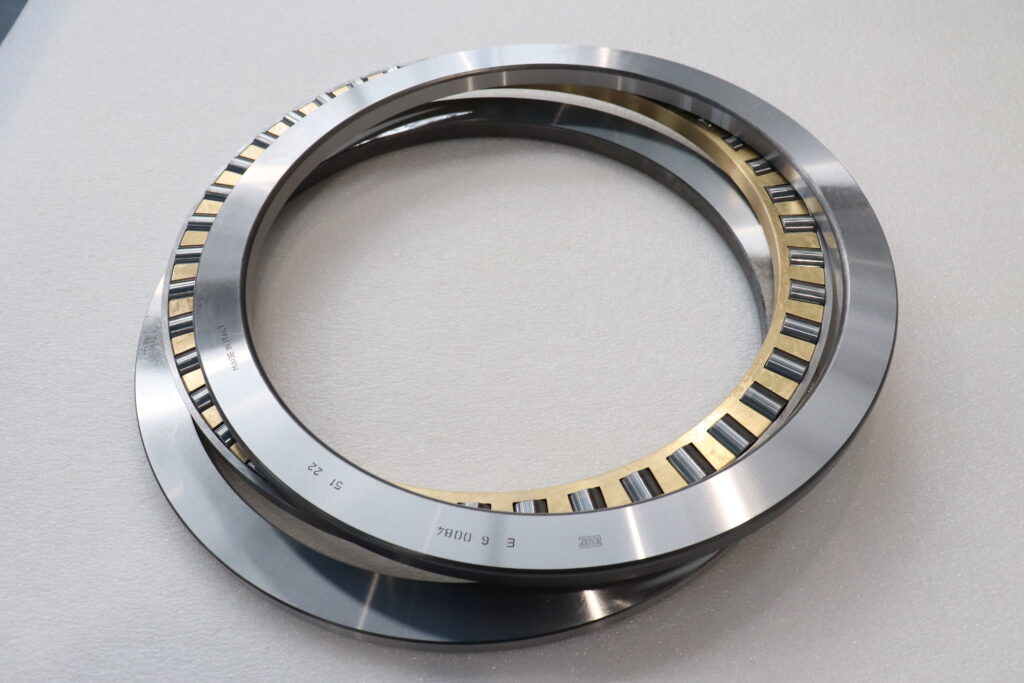
- Axial load: If the load is parallel to the axis, axial cylindrical roller bearings are designed to handle high axial loads and are ideal for applications involving displacement in this direction.
- Combined load: If loads need to be supported in both directions, other solutions such as tapered or self-aligning roller bearings may be more suitable.
2. Operating Speed
Speed is an important factor in bearing selection, and cylindrical roller bearings, which form the core of our production, offer solutions suited to different applications depending on operational requirements.
For applications up to moderate speeds, full-complement cylindrical roller bearings are the most suitable choice.
However, for high-speed applications, it is advisable to opt for bearings specifically designed to reduce friction and heat, ensuring more efficient performance.
In particular, caged cylindrical roller bearings are ideal for high-speed applications, as the cage reduces friction between the rollers, allowing for higher speeds compared to full-complement bearings.
Cages can be made of brass, steel, or light alloy, depending on operational needs.
Lighter cages, in particular, reduce the mass of the bearing, improving overall performance at high speeds.
3. Operating Environment
The environment in which the bearing operates can affect its performance. Here are some aspects to consider:
- Extreme temperatures: It is important to choose bearings designed to withstand high or low temperatures, made with specially treated materials and suitable lubricants.
- Contamination: In environments with dust, moisture, or contaminants, it is advisable to opt for bearings equipped with seals to protect internal components and ensure greater durability.
- Shock and vibration: If the application involves constant shocks or vibrations, cylindrical roller bearings are often the right choice thanks to their robustness.
4. Lubrication
Lubrication plays a crucial role in bearing service life:
- Grease: Ideal for low- to medium-speed applications, requiring periodic maintenance.
- Oil: Preferable for high-speed applications or high temperatures, thanks to its ability to dissipate heat more effectively.
5. Dimensions and Available Space
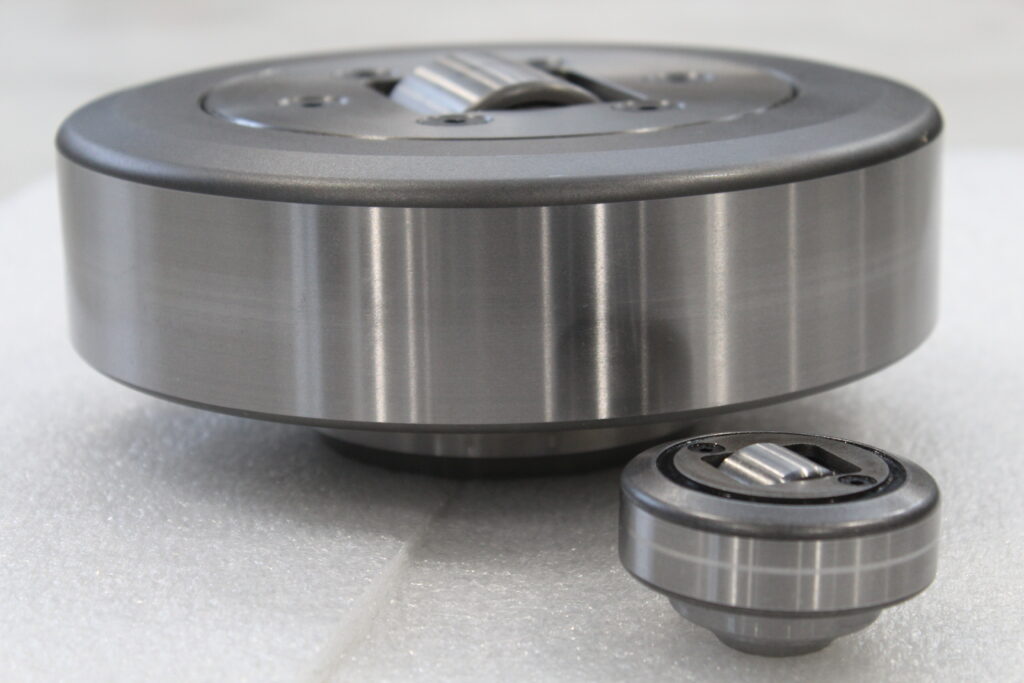
Bearing dimensions are often determined by the available space. If radial space is limited, low-profile or full-complement cylindrical roller bearings can be chosen, as they maximize load capacity within a reduced footprint.
6. Durability and Reliability
Finally, bearing durability is essential, especially in critical applications. For this reason, it is important to gather as much information as possible from the end customer in order to optimize design choices.
The choice of bearing depends on several factors, which must be carefully analyzed to ensure the best performance.
FARO BEARINGS offers a wide range of cylindrical roller bearings suited to every need, with tailor-made solutions for every type of application.