Thanks to their compact yet robust structure, Sendzimir cold rolling mills are capable of achieving significant reductions in strip thickness at high speeds and under heavy pressure. The processed material must meet extremely tight tolerances in terms of thickness, flatness, and surface finish.
Such requirements can only be met if the backing bearings operate with an exceptionally high level of precision.
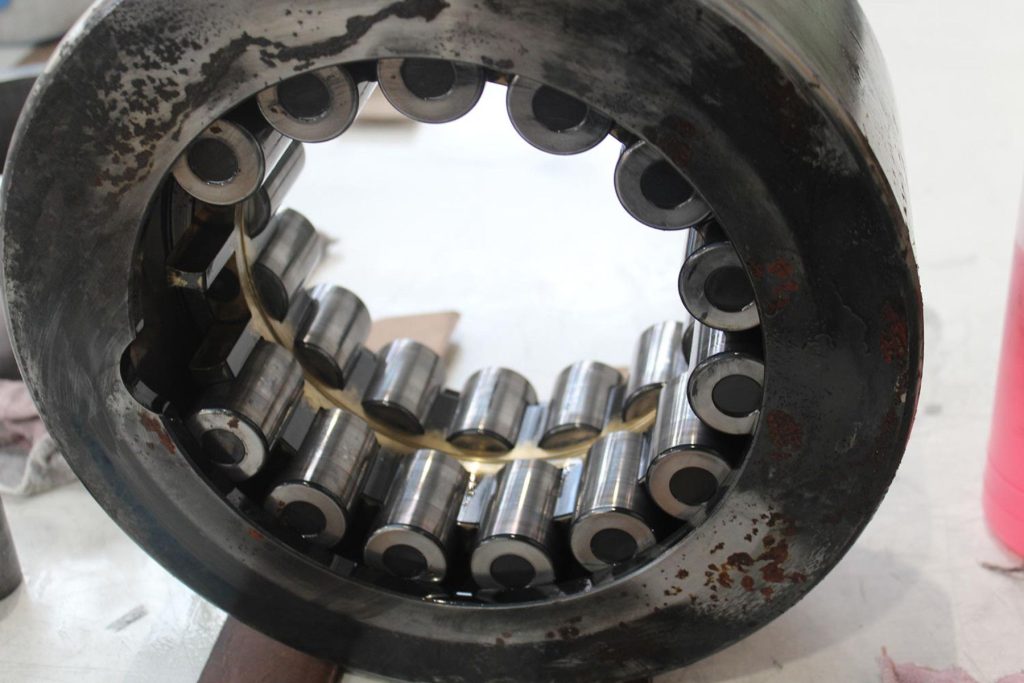
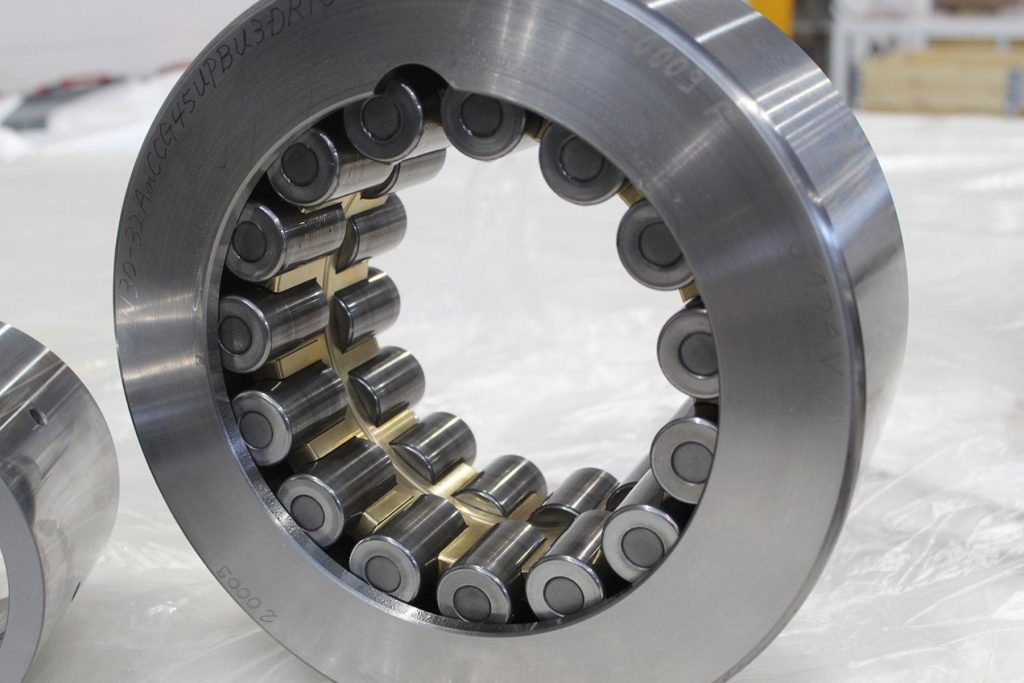
These bearings are multi-row cylindrical roller bearings characterized by thick outer rings and various design configurations to meet different application needs. Their performance, in addition to withstanding extremely high loads, is heavily influenced by the application itself: working as backing rollers, their outer diameter is exposed to abrasive wear and affects the quality of the rolled product. For this reason, the outer surface must be periodically reground to restore uniform dimensions within the same bearing set, thereby reinstating the geometric parameters of the original backing roller.
The quality of the backing rollers is primarily ensured by the use of high-purity steels, subsequently hardened through a new procedure that provides optimal mechanical properties, as well as by highly precise machining operations and advanced measurement methods. They are manufactured with tight tolerances and feature a rotational accuracy exceeding P4. These characteristics guarantee extremely high quality in the rolled product, in terms of both surface finish and flatness.
Reconditioning of Backing Bearings
The decades of experience gained through collaboration with numerous customers enabled Faro to develop well-tested processes for restoring backing bearings.
This makes it possible to significantly extend the service life of each bearing, resulting in substantial economic savings.
Reconditioning allows a bearing to be brought back to “as-new” condition, enabling considerable cost reductions and helping maintain consistent production profitability. It is also important to note that the time required for repair is significantly shorter than that needed to manufacture new products.
This reconditioning process also contributes to environmental sustainability by reducing the need to produce new components and therefore lowering the ecological footprint associated with bearing manufacturing and disposal.
Bearing reconditioning is thus a valuable service for the steel industry, as it not only reduces costs and improves part availability but also minimizes the risk of failures and resulting downtime.